What Is a Brand Identity Website? Your 2026 Guide

A brand identity website is a digital platform purpose-built to express a company’s cohesive brand through consistent visual design, messaging, and user experience. Investopedia defines brand identity as the visible elements of a brand, including colors, logo, and design, and notes it shapes every way customers experience and perceive a business.
That definition maps directly onto your website. Every page, every headline, every button color either reinforces who you are...
Or quietly contradicts it.
For coaches and online course creators especially, your website is often the first and most lasting impression you make. Getting it right is not optional.
What is a brand identity website and what does it include?
A brand identity website integrates three distinct layers: visual elements, verbal elements, and experiential elements. Together, these layers create a unified digital presence that communicates your brand before a visitor reads a single word of your copy. Harvard Business School Online describes brand identity as the distinct, recognizable elements that express what a brand stands for and directly influence buying decisions. That influence starts the moment someone lands on your site.
Visual elements are the most immediately recognizable layer. They include:
- Logo: Your primary mark, used consistently in the header, favicon, and footer
- Color palette: Typically two to four brand colors applied with intention across backgrounds, buttons, and accents
- Typography: A defined type scale, usually one to two font families, applied consistently to headings, body copy, and calls to action
- Imagery: Photography style, illustration approach, and icon sets that share a visual language
- Layout and site structure: The grid system, spacing rules, and page templates that give the site its visual rhythm
Verbal elements shape how your brand sounds. Your brand voice, the tone of your headlines, the warmth or authority in your copy, all of these communicate personality.
Shopify identifies written content as one of the six key website branding elements, alongside typography, color palette, visual assets, layout, and site structure. That framing matters because it treats copy as a design element, not an afterthought.
Experiential elements are the layer most coaches overlook. Navigation flow, page load speed, mobile responsiveness, and micro-interactions all shape how a visitor feels while using your site. A site that looks beautiful but frustrates users with slow load times or confusing menus sends a brand message too. It just is not the one you intended.

Pro Tip: Build a one-page brand reference document before you touch your website. List your hex codes, font names, approved image styles, and three adjectives that describe your brand voice. Every design decision should pass through that filter.
How does brand identity differ from brand personality and brand image?
These three terms get used interchangeably, but they describe three very different things. Confusing them leads to websites that feel inconsistent or off-brand in ways that are hard to diagnose.
Shopify draws a clear distinction between brand identity as the designed visual and verbal system, brand personality as the emotional traits a brand communicates, and brand image as the perception customers actually hold. Your website is responsible for expressing the first two and influencing the third.
| Concept | Definition | Website’s role |
|---|---|---|
| Brand identity | The intentional visual and verbal system you design | Expressed through logo, color, type, and copy |
| Brand personality | The human traits and emotional qualities your brand embodies | Communicated through tone, imagery, and UX style |
| Brand image | How customers actually perceive your brand | Shaped by the cumulative experience your site delivers |
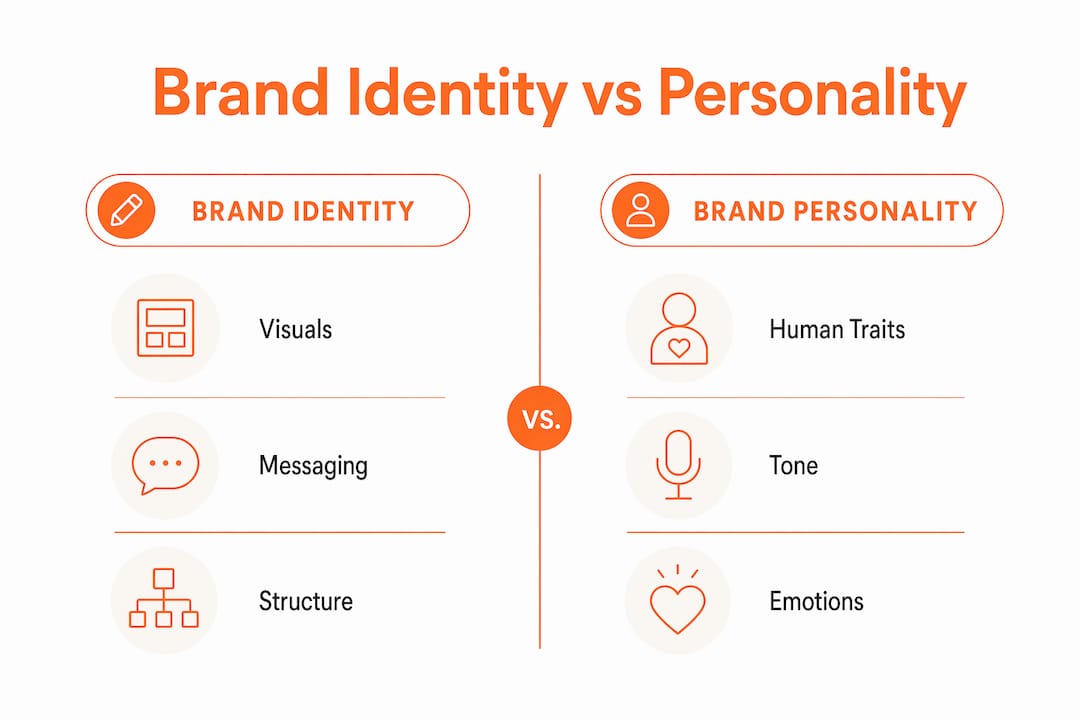
The gap between brand identity and brand image is where most businesses lose trust. You may design a site that feels premium and confident, but if the copy is inconsistent or the user experience is clunky, visitors form a different perception. Harvard Business School frames brand identity as the intent and meaning a company establishes to transform casual buyers into loyal advocates. That transformation only happens when identity and image align.
For coaches, brand personality carries particular weight. Clients are buying access to you, your methods, your energy, your worldview. Your website’s personality, whether that reads as warm and nurturing or direct and results-driven, must match the experience clients get when they work with you. A mismatch erodes trust before a discovery call even happens.
Why brand governance keeps your website on-brand over time
Brand governance is the system of rules, workflows, and review processes that prevents your website from drifting away from your brand identity as it grows. Most coaches think about branding at launch and then stop. That is exactly when brand drift begins.
GOV.UK’s brand guidelines demonstrate what mature governance looks like in practice. They codify detailed rules for color usage, typography application, and flexible adaptations across contexts, all integrated into review workflows. The result is a site that stays visually and verbally coherent across hundreds of pages and years of updates.
Here is how to build a governance practice that works for a coaching business:
- Document your brand standards. Write down your color codes, approved fonts, image guidelines, and tone rules. A shared Google Doc or Notion page works fine. The goal is a single source of truth anyone touching your site can reference.
- Create page templates. Reusable layouts for sales pages, blog posts, and landing pages prevent one-off design decisions that slowly fragment your visual identity.
- Set a review checkpoint before publishing. Before any new page or campaign goes live, check it against your brand standards. Northeastern University requires University Marketing approval for all digital contracts and asset reviews before launch. You do not need a full marketing department. You need a checklist and the discipline to use it.
- Schedule a quarterly brand audit. Spend 30 minutes every quarter reviewing your site’s key pages. Look for color inconsistencies, off-brand images, or copy that no longer reflects your current positioning.
- Update your brand document when your brand evolves. If you rebrand or refine your messaging, update the reference document first. Then update the site. Never let the site lead the brand.
Pro Tip: Set a recurring calendar reminder for your quarterly brand audit. Treat it like a client deliverable. Brands that stay consistent build recognition faster, and recognition is what makes your name come to mind when someone needs what you offer.
MediaValet emphasizes that effective website branding is a deliberate strategy integrating design, message, and UX. Governance is what keeps that strategy intact after launch day.
How to create a website that truly reflects your brand identity
Translating your brand strategy into a live website requires more than choosing colors you like. It requires a structured approach that connects every design and content decision back to your brand’s core positioning.
Start with your brand strategy before opening any design tool. Define your brand values, your ideal client, your unique positioning, and the emotional experience you want visitors to have. Everything else flows from this foundation. Coaches who skip this step end up with a visually pretty site that does not convert, because it does not communicate anything specific.
From there, build with consistency as the operating principle. Reusable interface patterns, including type scale, spacing rules, button styles, and card layouts, create a site that feels coherent and professional throughout. When every page shares the same visual grammar, visitors experience your brand as trustworthy and established. When pages feel visually disconnected, the opposite happens.
Test your site for recognition and emotional resonance before launch. Ask someone unfamiliar with your brand to spend two minutes on your homepage, then describe what they think you do and how they feel about it. Their answer tells you whether your brand identity is landing. If they describe something different from your intended positioning, you have a gap to close.
Coordinate your content and design reviews with anyone who contributes to your site. If a copywriter writes your sales page and a designer builds your opt-in page, both outputs need to pass through the same brand filter. Northeastern University’s Digital Brand Center coordinates marketing and brand teams for pre-launch asset reviews to maintain consistency over time. For a solo coach, this means building the habit of reviewing every new piece of content against your brand standards before it goes live.
For coaches building on Kajabi specifically, the platform’s structure makes consistency achievable without a full design team. You can explore web design best practices for coaches to see how these principles apply in practice on Kajabi-built sites.
Key takeaways
A brand identity website works because it translates your strategic brand elements into a consistent visual, verbal, and experiential system that builds recognition and trust with every visit.
| Point | Details |
|---|---|
| Brand identity website definition | A site purpose-built to express your brand through cohesive design, messaging, and user experience. |
| Three core layers | Visual, verbal, and experiential elements must all align to deliver a consistent brand impression. |
| Identity vs. image gap | The difference between how you design your brand and how visitors perceive it is where trust is won or lost. |
| Governance prevents drift | Documented standards, templates, and review checkpoints keep your site on-brand as it grows. |
| Test before launch | Ask an outside observer to describe your brand after two minutes on your site. Their answer reveals whether your identity is communicating clearly. |
What I’ve learned from building brand identity websites for coaches
Here is something I see constantly: coaches invest weeks choosing their brand colors and fonts, then launch a website where the copy sounds nothing like them. The visual identity is polished. The words feel like they were written by a committee. Visitors feel the disconnect even if they cannot name it.
Brand identity is not a design project. It is a communication project that design supports. The most effective coaching websites I have worked on share one quality: the copy and the visuals feel like they came from the same person. The warmth in the photography matches the warmth in the headlines. The directness in the brand voice matches the clarity of the navigation. Nothing sits quietly in a corner contradicting everything else.
The other pattern I notice is that coaches treat their website as a finished product rather than a living expression of their brand. Your brand evolves as your business grows, your niche sharpens, and your clients change. A site that perfectly represented you at launch can feel misaligned 18 months later. Building in a regular review practice, even just a quarterly check-in, is what separates brands that stay sharp from brands that slowly drift into generic territory.
If you are building your first coaching website or redesigning an existing one, start with your brand strategy. Get clear on who you serve, what makes you different, and how you want clients to feel when they land on your site. Then let that clarity drive every design and content decision. The personal brand building process for coaches is worth understanding deeply before you touch a single template.
Ready to build a brand identity website that works for your coaching business?
At Sierra Lin Design, I specialize in custom Kajabi websites built specifically for coaches and online course creators. Every site I build starts with your brand strategy, not a template.
That means your colors, your voice, your client flow, and your automation all work together from day one. If you are ready to stop wrestling with tech and start showing up online with a site that actually reflects your brand, explore the custom Kajabi design services built for coaches like you. Or grab the free Kajabi templates to start building your brand identity online today.
FAQ
What is a brand identity website?
A brand identity website is a site designed to express a company’s brand through consistent visual elements, messaging, and user experience across every page. It translates strategic brand decisions, including logo, color palette, typography, and tone, into a cohesive digital presence.
What are the key elements of brand identity design on a website?
The key elements include logo, color palette, typography, imagery, layout, brand voice, and navigation experience. Shopify identifies written content alongside visual assets as core website branding elements, meaning copy is as much a design decision as color choice.
How does brand identity differ from brand image?
Brand identity is the intentional system you design. Brand image is how customers actually perceive your brand based on their experience. Your website’s job is to close the gap between the two by delivering a consistent, recognizable experience at every touchpoint.
Why does brand consistency on a website matter?
Consistent branding builds recognition and trust over time. When visitors encounter the same visual language and tone across every page, they experience your brand as credible and established. Inconsistency, even subtle inconsistency, signals a lack of professionalism and erodes confidence.
How often should I review my website’s brand identity?
A quarterly brand audit is a practical standard for most coaching businesses. Review key pages for color consistency, image alignment, and copy tone. Update your brand reference document whenever your positioning evolves, and apply those changes to the site immediately.
Recommended
- Branding for Coaches: How To Build a Strong Personal Brand
- You Might be Overthinking Your Personal Branding Sierra Lin Design
- 5 Ways to Unlock Your Personal Brand Magnetism
 Sierra Janisse · Founder of Sierra Lin Design
Sierra Janisse is a verified Kajabi Expert who helps online business owners build profitable websites on Kajabi. From SEO and copywriting to website design, branding, automations and funnel strategy, she is the go-to expert for Kajabi users who want to attract more clients and customers with their websites.
🚨Get the FREE Checklist
Skip the Kajabi tears—Swipe the free Website Checklist & Funnel Map
Exactly what should go where on your Kajabi site to maximize leads.