Types of Kajabi Pages to Build First for Coaches

The types of Kajabi pages to build first are conversion-focused sales funnel pages, because they generate revenue and capture leads before your full website even exists. Kajabi organizes its page builder into three core categories: sales page templates, marketing and website pages, and course delivery templates. Each category serves a different stage of your client journey. New users who understand this taxonomy from day one avoid the most common mistake in Kajabi setup: spending weeks building a beautiful website that sits quietly in a corner while zero sales come in. Your build order should follow your business model, whether that's an online course, membership, or coaching program.
1. Which sales funnel pages should you build first in Kajabi?
Sales funnel pages, known inside Kajabi as pipeline pages, are the highest-priority pages for any new user. Kajabi pipelines are sequences of connected pages and emails that guide visitors through a buying journey, from first contact to completed purchase. Building these pages first means you can start generating leads and revenue while everything else is still a work in progress.
Here is the core pipeline sequence every new Kajabi user should build:
- Opt-in page. This is your lead capture page. Offer a freebie, a challenge, or a webinar registration in exchange for an email address. This page feeds your list and starts the relationship.
- Thank-you page. Most new users skip this or treat it as an afterthought. Skipping a proper thank-you page loses a high-intent moment when your new subscriber is most engaged. Use it to confirm the action, deliver the freebie, and point toward your next offer.
- Sales page. Kajabi offers several formats here: long-form sales, webinar registration, free challenge, and product launch. Choose the format that matches your offer type. A coaching program typically converts well on a long-form sales page, while a course launch benefits from a product launch format.
- Checkout page. Kajabi checkout pages are customizable and support order bumps and upsells. Getting this page right early prevents cart abandonment issues that are frustrating to debug after you have already run traffic to your funnel.
- Upsell or downsell pages. These are optional at launch but worth planning for. Once your core funnel converts, adding an upsell page can meaningfully increase your average order value without extra traffic.
Pro Tip: Build your entire pipeline sequence before you drive a single visitor to your opt-in page. Testing the full flow from opt-in to checkout confirmation takes less than ten minutes and saves hours of troubleshooting mid-launch.
The Kajabi landing page builder provides pre-built frameworks for each of these page types, so you are not starting from a blank canvas. Customize the copy, swap in your brand colors, and you can have a working funnel live within a day.

2. What marketing and website navigation pages come next?
Once your funnel is live and tested, your next priority is the marketing and website pages that build trust and support navigation. These pages share your site-wide header and footer, unlike landing pages, which are standalone. This structural difference matters because website pages feel like part of a cohesive brand experience, while landing pages are designed for focused, distraction-free conversion.
The key pages to build in this phase include:
- About page. This is where you share your story, your credentials, and why you are the right person to help your audience. Coaches especially benefit from a strong about page because clients buy the person before they buy the program.
- Contact page. Make it easy for potential clients to reach you. A simple contact form or a link to your booking tool is enough. Leaving this page out signals that you are hard to work with.
- Blog or resources page. This is your SEO engine. Consistent content here builds organic traffic over time and positions you as an authority in your niche. Even a handful of well-written posts can drive steady leads.
- Testimonials or social proof page. Trust is the currency of coaching. A dedicated page for client wins, case studies, or video testimonials gives hesitant buyers the push they need.
- Policy pages. Privacy policy, terms of service, and a refund policy are not glamorous, but they are required for legal compliance and they signal professionalism. Kajabi makes it straightforward to add these to your footer.
Avoid the common trap of trying to build all of these pages before your funnel is ready. The most effective approach is to focus on the minimal page set that reflects your customer journey, then expand your website as your business grows. Your about page and contact page are the two non-negotiables in this phase. Everything else can follow.
3. Which content delivery pages should course creators build first?
Course creators have a third layer of pages to think about: the actual content delivery pages inside their Kajabi product. These are separate from your marketing site and your funnel. They live inside the student experience after purchase.
The recommended build order for course delivery pages is:
- Create your product first. In Kajabi, your course lives inside a "product." Set up the product shell, including the title, thumbnail, and pricing, before you build any content inside it.
- Build your modules. Modules are the chapters of your course. Create all of your module titles before you start filling in lessons. This gives you a visual roadmap and prevents structural rework later.
- Add your lesson pages. Each lesson page holds your video, audio, text, or downloadable content. Drip scheduling lets you release lessons on a set timeline, which is useful for cohort-based programs where you want students to progress together.
- Build module overview pages. These pages give students a preview of what is coming in each module. They serve as a course roadmap and reduce the overwhelm that students feel when they first log in.
- Set up a community feed page. If your course includes peer interaction, a community page keeps engagement inside your Kajabi ecosystem rather than sending students to a Facebook group.
Pro Tip: Start your course build from the content structure outward, meaning modules and lessons first, then the student-facing design. Building the design shell before your content is finalized leads to rework that costs you time.
The content delivery pages you build here directly support the promises you made on your sales page. If your sales page promises a structured, step-by-step program, your course structure needs to deliver exactly that experience from the first login.
4. What are the key Kajabi page types to build first for memberships and coaching programs?
Memberships and coaching programs have distinct page needs compared to standalone courses. The core difference is recurring value. Membership sites must clearly define their recurring offer on every key page, whether that is a content library, live community, coaching access, or a hybrid of all three.
For membership sites, prioritize these pages:
- Membership sales page. This page must answer one question clearly: why should someone pay you every month? A compelling value proposition here is what drives recurring revenue and reduces churn.
- Gated content library page. This is the member-only area where your content lives. Organize it clearly from day one. A confusing library kills retention faster than almost anything else.
- Community or coaching access page. If your membership includes live calls or a peer community, build the access page early and make it easy to find. Members who cannot find their calls cancel.
- Onboarding page. New members need a clear starting point. An onboarding page that says "Start here" reduces support requests and increases early engagement, which directly improves retention.
For coaching programs, the focus shifts to program layout and communication. Build a program overview page that maps out the coaching journey, a session booking or scheduling page, and any resource pages your clients will reference between sessions. A clear value proposition on these pages is not optional. It is what keeps clients enrolled and referring others.
5. How do Kajabi page types compare and when to prioritize each?
Understanding the differences between Kajabi's three page categories helps you make faster decisions about your build order. Here is a direct comparison:
| Page type | Primary purpose | Key feature | Build order |
|---|---|---|---|
| Sales funnel pages | Convert visitors into leads and buyers | No site header/footer, focused flow | Build first |
| Marketing/website pages | Build trust and support navigation | Shared header/footer, brand cohesion | Build second |
| Content delivery pages | Deliver your course or program | Gated, inside product, student-facing | Build third |
The pattern is consistent regardless of your business model. Funnel pages first, website pages second, content delivery pages third. The only variation is which funnel pages and which content pages you prioritize based on whether you are selling a course, membership, or coaching program.
Pro Tip: Aim for a minimal viable funnel before you touch your website pages. A working opt-in page, a thank-you page, and a sales page connected to a checkout is enough to start making sales. You can build the rest of your site around real customer feedback.
For coaches who want to attract clients through organic search, the best Kajabi features for coaches include the pipeline builder, the blog, and the built-in SEO settings on every page. Using these together creates a client flow that runs with minimal manual effort.
Key takeaways
The most effective Kajabi setup starts with sales funnel pages, adds trust-building website pages second, and builds content delivery pages third, in alignment with your specific business model.
| Point | Details |
|---|---|
| Build funnel pages first | Opt-in, thank-you, sales, and checkout pages generate revenue before your full site is ready. |
| Website pages come second | About, contact, and blog pages build trust and SEO after your funnel is validated. |
| Course structure before design | Create modules and lessons before styling your student experience to avoid rework. |
| Memberships need clear value | Your membership sales and onboarding pages must answer "why subscribe" immediately. |
| Minimal viable funnel wins | Three to four connected pages are enough to start selling and gathering real feedback. |
What I have learned from building Kajabi sites for coaches
I have seen the same pattern play out dozens of times. A coach spends three weeks perfecting their homepage, agonizing over font pairings and hero images, and then wonders why no one is buying. The homepage is not the problem. The missing funnel is.
The coaches who launch fastest and start earning soonest are the ones who build their opt-in page, their sales page, and their checkout page first. Full stop. Everything else is secondary until those three pages are live and tested. I have watched clients go from zero to their first paid enrollment within a week using nothing more than a clean opt-in page and a well-written sales page connected to Kajabi checkout.
The other thing I push back on is the idea that your course needs to be complete before you sell it. Build your course structure, meaning your modules and lesson titles, and sell access before every lesson is recorded. This is called a beta launch, and it is one of the fastest ways to validate your offer and fund the full build. Your early students get a lower price and direct input into the content. You get revenue and real feedback. Everyone wins.
Iterate after you launch. Your first version of any Kajabi page will not be your best version. The common Kajabi website mistakes I see most often come from over-building before launch, not under-building. Get your pages live, get real traffic on them, and improve based on what the data tells you.
Ready to build your Kajabi pages faster?
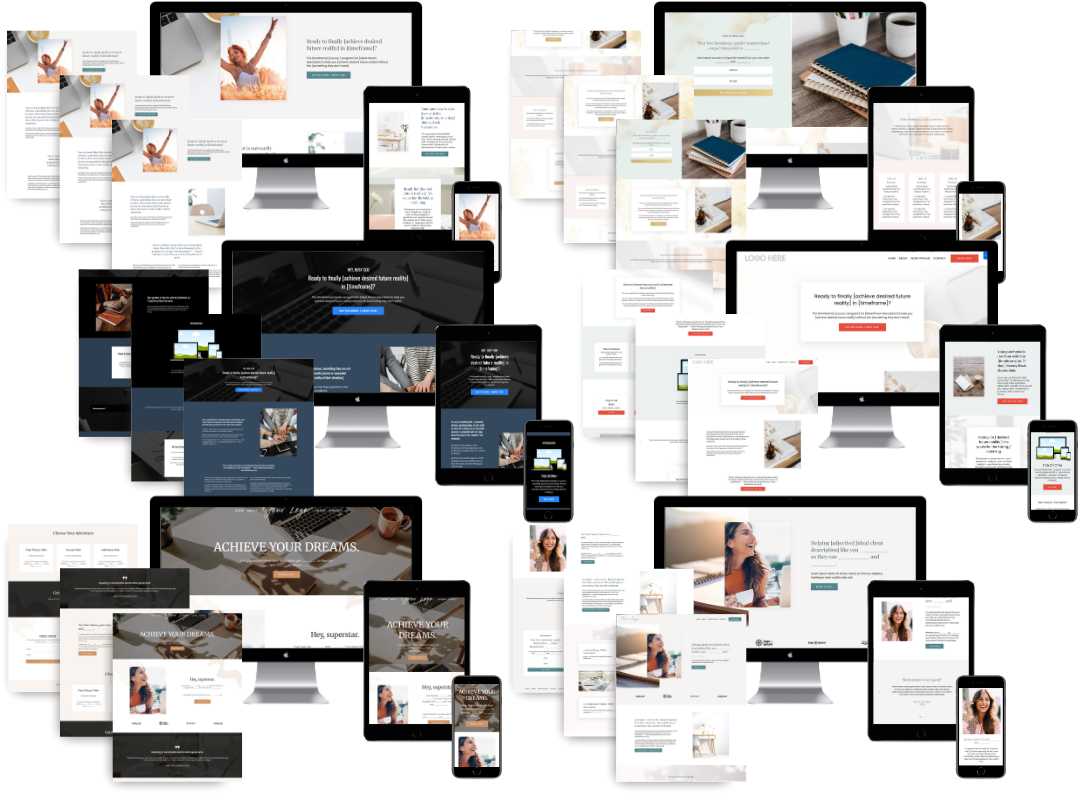
If you are staring at a blank Kajabi site and not sure where to start, Sierra Lin Design has two ways to help. Download the free Kajabi templates to get your funnel and website pages up quickly without starting from scratch. Each template is designed with conversion in mind, so you are not just filling in a pretty layout. You are building pages that actually work. If you want a fully custom Kajabi site built around your brand and your client flow, the custom Kajabi web design services at Sierra Lin Design are built specifically for coaches and course creators who want a site that looks professional and performs from day one.
FAQ
What are the first pages to build in Kajabi?
The first pages to build in Kajabi are your sales funnel pages: an opt-in page, a thank-you page, a sales page, and a checkout page. These four pages form a complete pipeline that captures leads and converts them into paying clients.
Do Kajabi landing pages share the site header and footer?
No. Kajabi landing pages do not share the site-wide header and footer, which makes them ideal for focused conversion flows without navigation distractions. Website pages, by contrast, maintain the consistent header and footer across your site.
How do I create a course in Kajabi?
To create a course in Kajabi, start by building a product, then add modules, then add lesson pages inside each module. Drip scheduling is available to release lessons on a set timeline for cohort-based programs.
What pages does a Kajabi membership site need first?
A Kajabi membership site needs a membership sales page, a gated content library page, and an onboarding page as its first priorities. These three pages define the value, deliver the content, and orient new members from their first login.
Can I start selling on Kajabi before my website is finished?
Yes. A working opt-in page, sales page, and checkout page is enough to start selling on Kajabi before your full website is built. Many coaches make their first sales using only these three pages while their website is still in progress.
Recommended
 Sierra Janisse · Founder of Sierra Lin Design
Sierra Janisse is a verified Kajabi Expert who helps online business owners build profitable websites on Kajabi. From SEO and copywriting to website design, branding, automations and funnel strategy, she is the go-to expert for Kajabi users who want to attract more clients and customers with their websites.
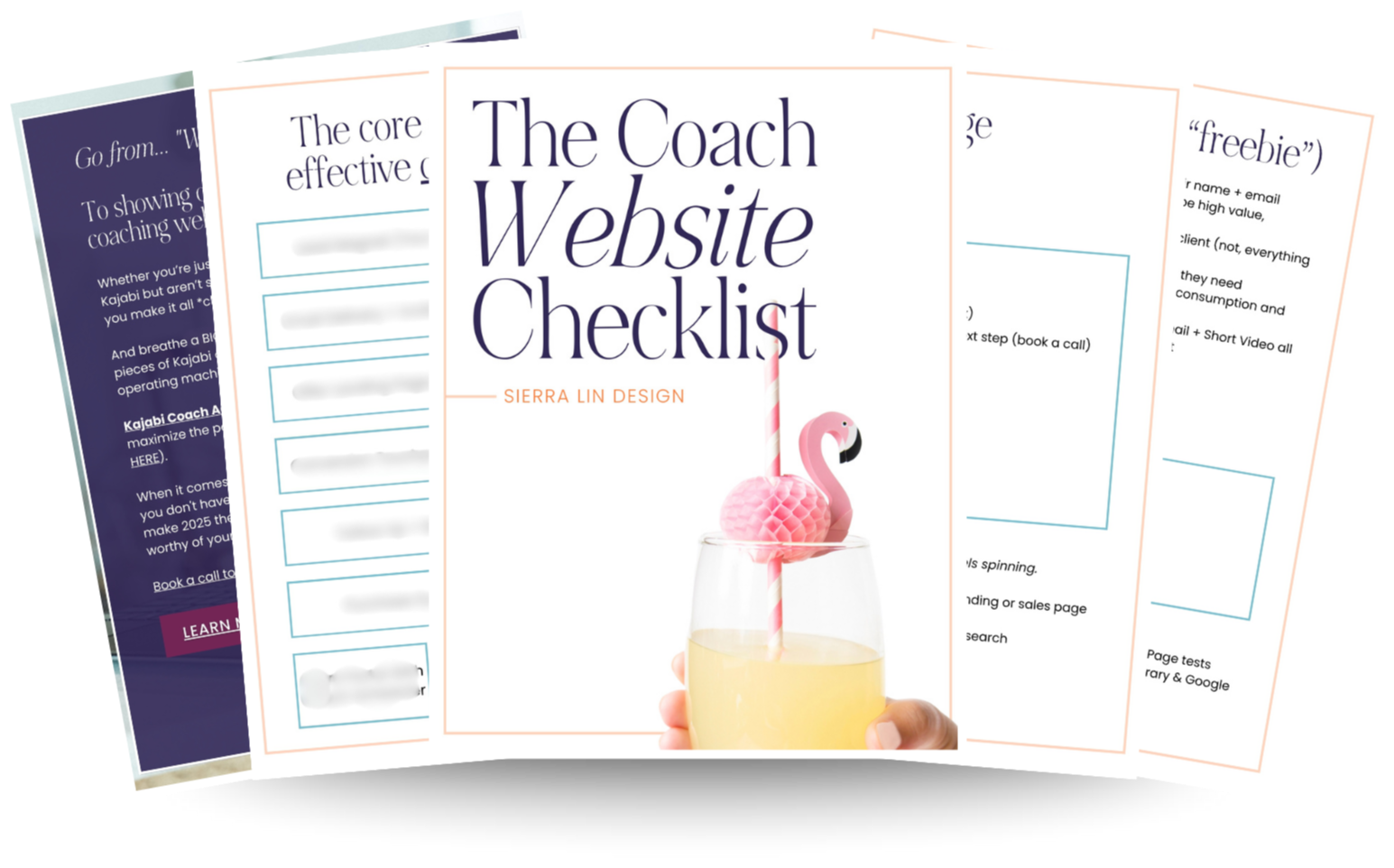
🚨Get the FREE Checklist
Skip the Kajabi tears—Swipe the free Website Checklist & Funnel Map
Exactly what should go where on your Kajabi site to maximize leads.