Why Kajabi Suits Digital Entrepreneurs in 2026

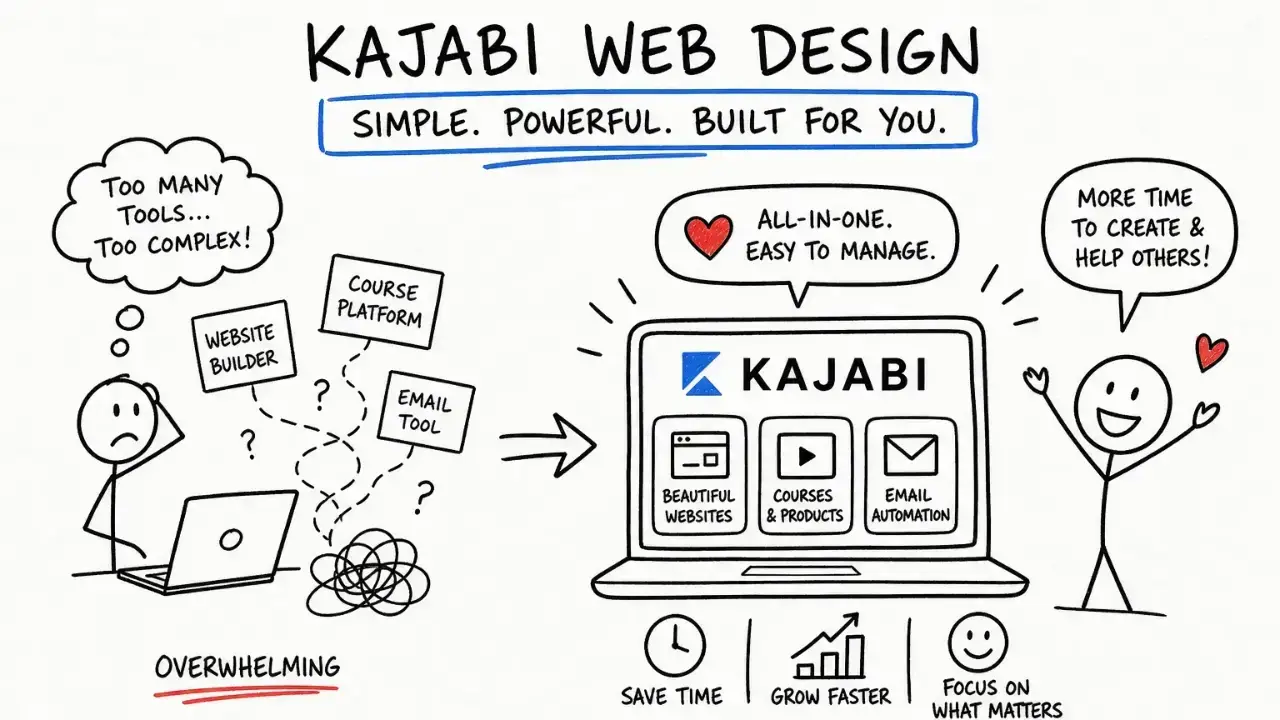
Kajabi is an all-in-one online business platform that consolidates course creation, membership management, email marketing, sales funnels, and payment processing into a single environment. For digital entrepreneurs managing multiple tools just to run one business, that matters enormously. The platform has supported over 100,000 businesses and processed more than $10 billion in creator earnings, which signals real-world scale and staying power. Why Kajabi suits digital entrepreneurs comes down to one thing: it replaces the fragmented tech stack that quietly drains your time, money, and focus every single week.
Why Kajabi suits digital entrepreneurs better than fragmented tools
The core problem most digital entrepreneurs face is not a lack of good tools. It's having too many of them. You end up with one platform for your course, another for email, a third for landing pages, and a fourth for payments. Each one needs to talk to the others, and when something breaks, you spend hours troubleshooting instead of serving clients.
Kajabi solves this by building every function into one platform. Here is what that looks like in practice:
- Course builder: Upload video, audio, PDFs, and text. Set content dripping schedules so students receive lessons over time. Track completion rates and engagement directly inside your dashboard.
- Membership site tools: Create tiered access levels so different members see different content. Members get personalized dashboards that reflect their specific progress and purchases.
- Email marketing: Send broadcast emails to your full list or trigger automated sequences based on specific actions, like completing a module or abandoning a checkout page.
- Sales funnels and pipelines: Build landing pages, opt-in forms, checkout pages, and thank-you pages inside the same environment where your course lives. No third-party funnel builder required.
- Analytics: Monitor revenue, subscriber growth, course completion, and email open rates from one centralized dashboard.
The centralized dashboard is where the real efficiency lives. Kajabi's unified setup eliminates 10 to 20 hours of manual integration work per launch. That is time you get back to spend on content creation, client work, or marketing.
Pro Tip: Before you build your first product on Kajabi, map out your full client flow from opt-in to purchase to onboarding. Kajabi's automation builder can handle every step of that sequence, but only if you plan it before you build it.

How much money and time does Kajabi actually save?
The financial case for Kajabi is specific and measurable. When you add up the individual subscriptions for a CRM, an email marketing tool, a course hosting platform, a funnel builder, and a landing page tool, the monthly cost typically ranges from $285 to $545. Kajabi's Basic plan runs $143 per month when billed annually, with the full feature set included.
That translates to monthly savings of $200 to $500 for most entrepreneurs making the switch. The savings compound quickly, especially when you factor in the time cost of managing integrations that break every time one platform updates its API.
| Cost category | Fragmented tech stack | Kajabi |
|---|---|---|
| Email marketing tool | $50–$100/mo | Included |
| Course hosting platform | $79–$149/mo | Included |
| Funnel builder | $97–$197/mo | Included |
| CRM and automation | $49–$99/mo | Included |
| Total estimated cost | $285–$545/mo | $143/mo (Basic, annual) |
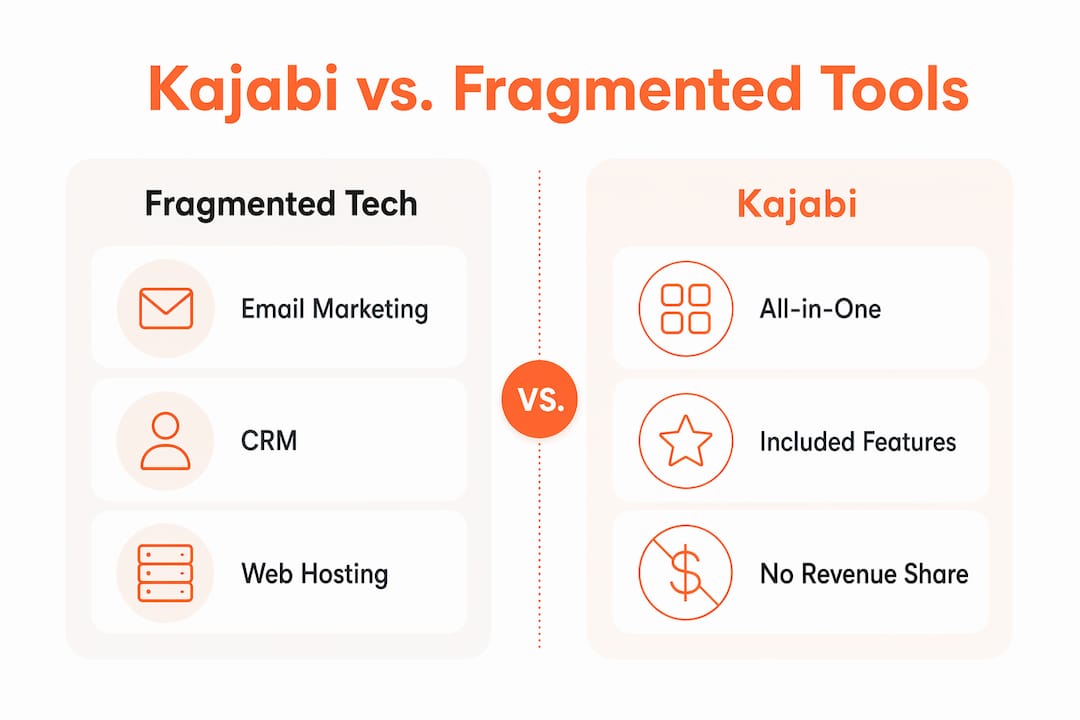
Kajabi also charges zero revenue share fees. Every dollar a student pays goes directly to you, which is not the case on every course platform. One mid-priced course sale at $197 covers your monthly platform cost entirely. That math works in your favor from day one.
The 2026 pricing adjustment moved the Growth plan to $199 per month and the Pro plan to $399 per month on annual billing. Those numbers are higher than they were two years ago, but the value calculation still holds when you account for what you are replacing.
Why Kajabi's architecture fits membership and coaching businesses specifically
Generic website builders and basic course platforms were not designed for knowledge commerce. Kajabi was. That distinction matters more than most entrepreneurs realize until they try to build a membership site or coaching program on a platform that was not built for it.
Here is how Kajabi's purpose-built architecture creates a real advantage for membership and coaching businesses:
- Content dripping and cohort management: Schedule lesson releases by date or by student progress. Run live cohort courses where everyone moves through content together, or offer self-paced programs. Both work natively inside Kajabi without plugins.
- Dynamic member dashboards: Each member sees a dashboard personalized to their purchases and progress. This creates a polished, professional experience that generic builders cannot replicate without significant custom development.
- Coaching program management: Kajabi's coaching tools include session scheduling, client note-taking, and progress tracking. Coaches can manage their entire client roster inside the platform.
- CRM automations tied to activity: When a member completes a course module, Kajabi can automatically send a congratulations email, unlock the next tier of content, or tag the contact for a follow-up offer. These automations run without any manual input.
- Community features: Kajabi includes a built-in community space where members can interact, ask questions, and engage with your content. This replaces the need for a separate Facebook Group or Circle community.
Kajabi's knowledge-commerce architecture includes native automations based on course progress and membership tiers that generic builders simply do not offer. Building the same functionality on a platform like Wix would require multiple third-party integrations, each adding cost and potential failure points.
Pro Tip: Seed your Kajabi membership community before you officially launch. Invite 10 to 20 beta members early, encourage them to post and engage, and build active community culture before the doors open to the public. A quiet community at launch kills momentum fast.
Membership pricing on Kajabi typically ranges from $27 to $197 per month, with annual plan options that improve both retention and revenue predictability. That pricing range is well within reach for most audiences, and Kajabi's billing tools handle the recurring payments automatically.
Kajabi vs. other platforms: when it's the smarter choice
Kajabi is not the right platform for everyone, and being honest about that builds more trust than overselling it. Here is a clear-eyed comparison.
Where Kajabi wins:
- You want one login, one dashboard, and one support team for your entire business.
- You are running courses, memberships, and coaching simultaneously and need them to work together.
- You want automations that respond to real student behavior, not just time-based email sequences.
- You are ready to invest in a platform that grows with your business rather than patching together cheaper tools.
Where alternatives may make more sense:
- You are just starting out and want to test one course idea with minimal upfront cost.
- Your primary need is a simple course platform without marketing tools.
- You have a developer on your team who can build custom integrations on a cheaper stack.
Kajabi is most effective for entrepreneurs generating $3,000 or more per month who want to replace multiple tools with one integrated platform. Below that revenue threshold, the monthly cost may feel heavy. Above it, the time savings and operational clarity pay for themselves quickly.
Other course platforms focus primarily on content delivery and leave marketing to third-party tools. Kajabi's sales funnel builder, email automation, and checkout pages are native, which means your conversion data, your student data, and your revenue data all live in the same place. That is a significant advantage when you are making decisions about what to launch next.
Strategic sequencing also matters here. Launch a course first to validate your offer and build an audience, then layer in a membership for recurring revenue. Kajabi supports both product types natively, so you never have to migrate platforms as your business grows.
Key takeaways
Kajabi suits digital entrepreneurs because it replaces five or more separate software subscriptions with one platform, saving $200 to $500 monthly while cutting 10 to 20 hours of integration work per launch.
| Point | Details |
|---|---|
| All-in-one cost savings | Kajabi replaces $285–$545/mo in separate tools for $143/mo on the annual Basic plan. |
| Time savings per launch | Unified setup eliminates 10–20 hours of integration work every time you launch a product. |
| Purpose-built for knowledge commerce | Native automations, member dashboards, and coaching tools outperform generic website builders. |
| Ideal revenue stage | Kajabi delivers the most value for entrepreneurs generating $3,000+ per month consistently. |
| Strategic product sequencing | Launch courses first to validate, then add memberships to build predictable recurring revenue. |
My honest take on Kajabi in 2026
I have worked inside Kajabi with coaches and course creators long enough to have a strong opinion on this: the platform's biggest advantage is not any single feature. It is the absence of friction. When your email tool, your course, your checkout page, and your automation all live in one place, you stop losing hours to troubleshooting and start spending that time on the work that actually grows your business.
That said, Kajabi is not a magic fix. I have seen entrepreneurs sign up, build a beautiful site, and still struggle because they never committed to a clear launch strategy. The platform gives you everything you need. You still have to show up with a plan.
The vendor lock-in concern is real. Your content, your email list, and your automations are all inside one ecosystem. If Kajabi ever raises prices significantly or changes its terms, migrating is not trivial. My recommendation: treat your email list as your most portable asset. Export it regularly and nurture it well. That list belongs to you regardless of what platform you are on.
The entrepreneurs I see thriving on Kajabi are the ones who commit to it fully. They do not keep one foot on another platform "just in case." They learn the automation tools, they build their funnels properly, and they let the system run like clockwork while they focus on their clients. That is the version of Kajabi worth investing in.
Most six-figure Kajabi creators maintain around 4,000 email subscribers. That number is smaller than most people expect. It tells you that success on this platform is not about massive reach. It is about owning a focused, engaged audience and converting them well.
Ready to build your Kajabi business the right way?
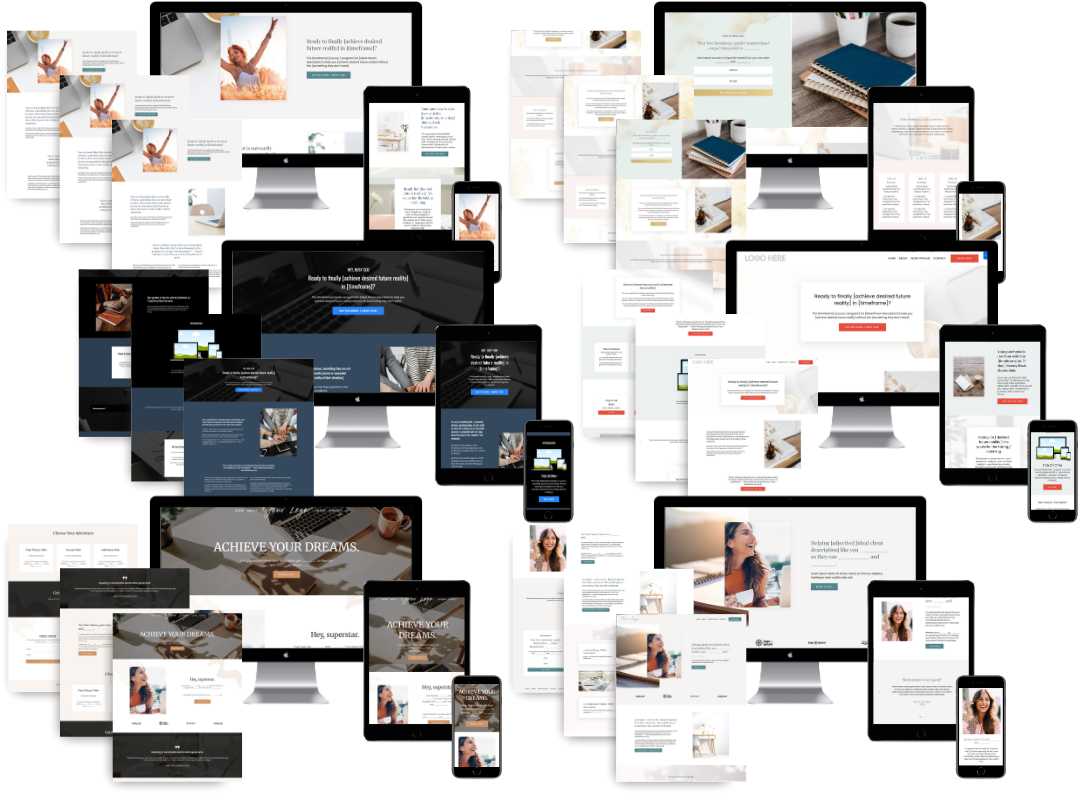
If you are serious about launching on Kajabi without the tech headaches, Sierra Lin Design is here to help. You can grab free Kajabi templates to get your site up fast without starting from scratch. If you want something built specifically for your brand, Sierra Lin Design's custom Kajabi web design service handles the entire build for you, from branding to automation setup to launch-ready pages. No cookie-cutter solutions. No endless back-and-forth. Just a site that works as hard as you do.
FAQ
What is Kajabi used for by digital entrepreneurs?
Kajabi is used to create and sell online courses, run membership sites, manage coaching programs, send email marketing, and build sales funnels. It consolidates all of these functions into one platform so entrepreneurs do not need separate tools for each task.
Is Kajabi worth the cost for new entrepreneurs?
Kajabi is best suited for entrepreneurs already generating $3,000 or more per month, as the platform cost is easier to justify at that revenue level. For those just starting out, a simpler course platform may be a better fit until revenue is consistent.
How does Kajabi compare to other course platforms?
Kajabi includes built-in email marketing, sales funnels, and automation tools that most course-only platforms do not offer natively. This makes it a stronger choice for entrepreneurs who want marketing and content delivery in one place rather than managing multiple integrations.
Can Kajabi support a membership business?
Kajabi supports membership businesses with tiered access, personalized member dashboards, recurring billing, and community features built directly into the platform. Membership pricing on Kajabi typically ranges from $27 to $197 per month, with annual plan options available.
How many businesses use Kajabi?
Over 100,000 businesses use Kajabi, and the platform has processed more than $10 billion in total creator earnings. That scale reflects both the platform's maturity and its ability to support businesses at various stages of growth.
Recommended
 Sierra Janisse · Founder of Sierra Lin Design
Sierra Janisse is a verified Kajabi Expert who helps online business owners build profitable websites on Kajabi. From SEO and copywriting to website design, branding, automations and funnel strategy, she is the go-to expert for Kajabi users who want to attract more clients and customers with their websites.

🚨Get the FREE Checklist
Skip the Kajabi tears—Swipe the free Website Checklist & Funnel Map
Exactly what should go where on your Kajabi site to maximize leads.