The Role of Your Website in a Coaching Business

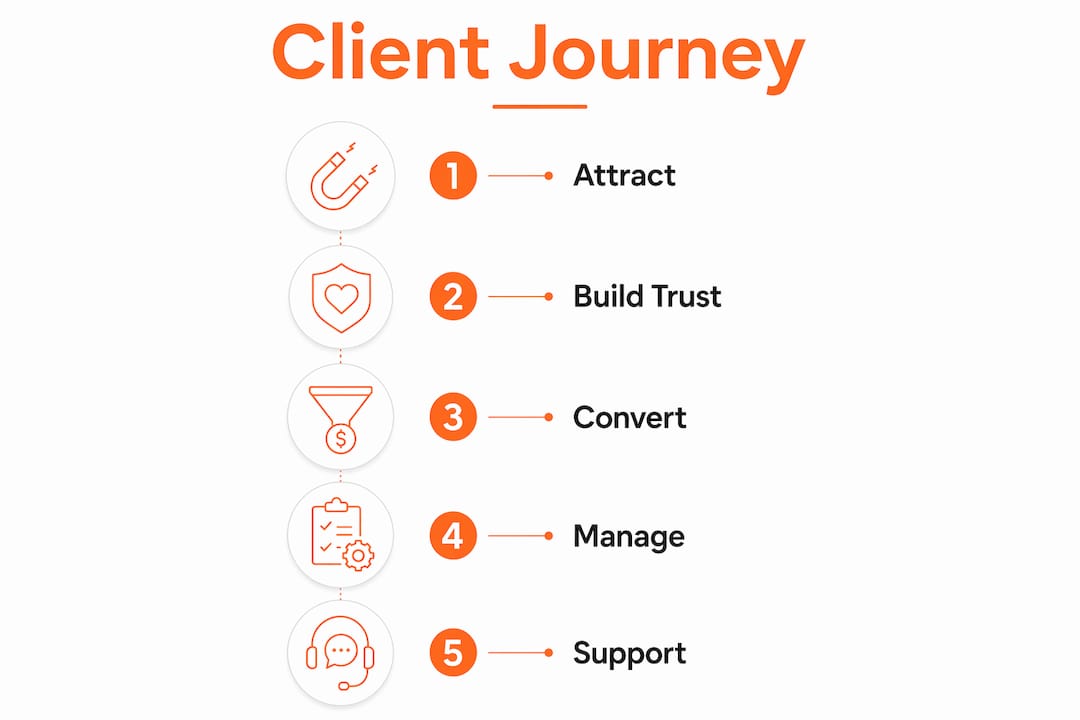
A coaching website is defined as a client engagement system that attracts prospects, builds trust, converts leads, and supports ongoing delivery...
All without you lifting a finger between sessions. The role of a website in a coaching business goes far beyond a digital brochure. According to Coachful's framework, a well-built coaching site maps directly to five business functions: attract, trust, action, reduce admin, and support delivery. That's not a nice-to-have. That's your business operating system. Coaches who treat their website as a passive introduction page leave real revenue on the table every single day.
What are the essential roles of a coaching website in attracting and converting clients?
Your website is often the first and last touchpoint a potential client has with your brand. That means it carries enormous weight before you ever speak to anyone. A site that communicates clearly, loads fast, and guides visitors toward a next step does the heavy lifting of your sales process automatically.
Attraction starts with messaging, not aesthetics. When a visitor lands on your homepage, they need to know within seconds who you help, what you help them achieve, and why you are the right person for the job. Targeting one specific audience with clear, focused messaging reduces visitor overwhelm and measurably improves conversion. A homepage that tries to speak to everyone ends up speaking to no one.

Trust follows clarity. Visitors scan for credentials, testimonials, a recognizable face, and signals that you understand their specific problem. A professional photo, a short video introduction, and two or three client results placed above the fold do more for trust than a wall of text about your certifications. The goal is to make a stranger feel like they already know you before they book a call.
Make the next step easy to find on your main pages. Use a clear call to action, such as "Book a Free Call," in your navigation, on your homepage, and on your services pages. Tell visitors what happens when they click, and keep the path to booking simple so they can act when they are ready.
Here is what a conversion-focused coaching website includes:
- A clear headline on the homepage that names the client's transformation
- An About page that connects your story to your client's problem
- A Services page that explains outcomes, not just session formats
- Testimonials placed near every CTA, not just on a dedicated reviews page
- A booking button in the navigation bar on every device
Pro Tip: Write your homepage and About page so someone can quickly understand who you help, what you offer, and why your approach is relevant. Use descriptive headings, clear service descriptions, and an identifiable author or business name. Each key section should make sense even when a reader sees it on its own.
How does a coaching website reduce administrative burden and support client management?
The administrative side of running a coaching practice is where most coaches quietly burn out. Chasing down intake forms, sending payment reminders, and manually scheduling sessions eats hours every week. Your website can eliminate most of that friction when it is built correctly.
Here is how a well-integrated coaching website handles the operational workflow:
- Make online booking easy to access. Place an embedded scheduler or a clearly labeled booking button near your service details. Explain the session format, length, and next steps before visitors choose a time, and check that the booking process is easy to use on a phone.
- Automated intake forms triggered at booking. When a client books a session, an intake form fires automatically. You receive everything you need before the call without a single follow-up email.
- Integrated payment processing. Collecting payment at the point of booking reduces no-shows significantly. Clients who have paid are far more committed than those who have not.
- Automated reminders. Email reminder sent 24 hours and one hour before a session cut no-show rates without any manual effort on your part.
- Client portals for resource sharing and progress tracking. A portal inside your website gives clients access to session recordings, worksheets, and homework between appointments. This boosts engagement and perceived value without adding to your workload.
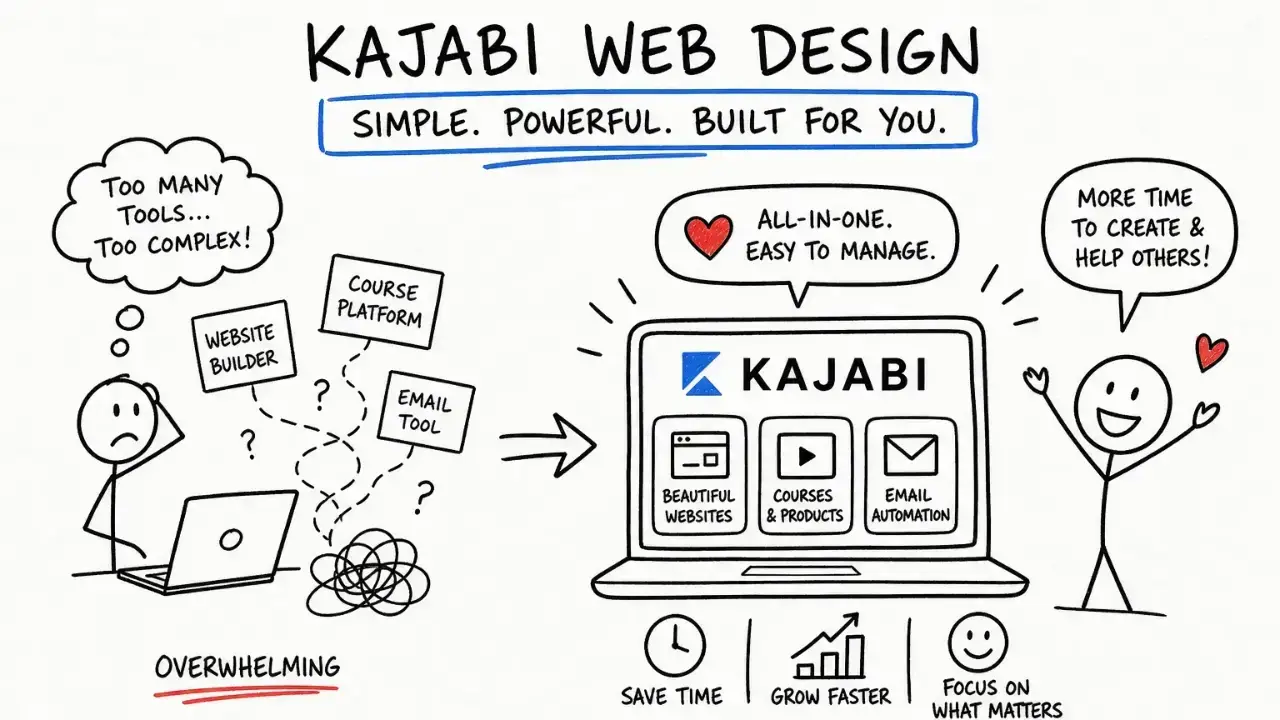
Treating your website like an operating system that consolidates intake, booking, payments, and communication converts it from a brochure into a genuine business asset. Platforms like Kajabi make this consolidation straightforward because scheduling, payments, and course delivery live inside one ecosystem. DIY integrations using separate tools like Calendly, Stripe, and Google Drive can work, but they create fragmentation that adds friction for both you and your clients.
Pro Tip: Before choosing your tech stack, map your client journey from first contact to final session. Every tool you add should serve a step in that journey. If it does not, cut it.
What website features and content establish authority and client trust?
Authority is not claimed. It is demonstrated through the content and design choices your website makes consistently. Coaches who invest in this area see longer time-on-site, higher inquiry rates, and clients who arrive already sold on working with them.
The features that build authority most effectively include:
- Authentic photography and video. Stock images signal inauthenticity immediately. A professional headshot and a short welcome video on your homepage create a personal connection that no stock photo library can replicate. Clients hire coaches they feel they know.
- A detailed About page. This page is consistently one of the most visited pages on any coaching website. It should tell your story in a way that connects directly to your client's situation. Why did you become a coach? What have you overcome or achieved that qualifies you to guide others through the same territory?
- A Services page that sells transformation. Listing "60-minute sessions" is not a service description. Describing what a client's life looks like after working with you for three months is. Outcomes sell. Formats do not.
- Testimonials placed strategically. A dedicated testimonials page is less effective than placing two or three specific client results directly next to your CTAs. Specificity matters. "Sierra helped me sign three clients in my first month" outperforms "Great coach, highly recommend" every time.
- A blog or resource section. Publishing articles on topics your ideal client is already searching for demonstrates expertise and improves your SEO rankings over time. Well-structured authoritative content also increases your eligibility to appear in Google AI Overviews, which shape user perception before they even visit your site.
You can explore the essential website features that coaching professionals need to prioritize for client engagement and conversion.
How do website performance and technical factors impact coaching business success?
A beautifully designed coaching website that loads slowly is a leaking bucket. You can pour traffic in at the top, but you will lose most of it before a single visitor reads your headline.
Someone browsing your coaching website between meetings may have little patience for a slow page. Help them reach your offer quickly by keeping pages focused, resizing large images, and removing elements that get in the way of reading or booking. Test the experience on your own phone rather than relying only on how the site looks on a desktop.
Review how quickly your main content appears, whether the layout stays steady as the page loads, and how easily visitors can use buttons and forms. Pay particular attention to your homepage, services pages, and booking flow. These checks help you find practical improvements to the experience your prospective clients have.
| Technical factor | What it measures | Coaching business impact |
|---|---|---|
| Largest Contentful Paint (LCP) | How fast the main content loads | Determines whether visitors stay or leave |
| Cumulative Layout Shift (CLS) | Visual stability during load | Affects trust and readability on mobile |
| Interaction to Next Paint (INP) | Responsiveness to user input | Impacts booking form and CTA usability |
| Mobile page speed | Overall load time on mobile devices | Directly tied to bounce rate and conversions |
Strong messaging and a usable website work together. Explain your offer clearly, answer your ideal client's questions, and make each next step easy to follow. Then use performance checks to identify obstacles such as slow-loading images or shifting buttons. A high performance score alone cannot explain your services or help visitors decide whether you are the right coach for them.
The best approach is to optimize Core Web Vitals after your content strategy is solid. Compress images, use a fast hosting provider, and minimize unnecessary plugins or scripts. On Kajabi, many of these optimizations are handled at the platform level, which is one reason it is a strong choice for coaches who want performance without becoming web developers.
Key takeaways
A coaching website functions as a complete client engagement system, not a static page, and every design and content decision should serve that system.
| Point | Details |
|---|---|
| Website as business system | Your site should handle attraction, trust, conversion, admin, and delivery in one place. |
| Conversion-focused design | Place CTAs on every page and remove all friction from the booking path. |
| Admin automation | Integrate intake, payment, and reminders directly on your site to cut no-shows and save time. |
| Authority through content | Authentic photos, outcome-focused service pages, and a blog build credibility that converts visitors. |
| Performance as baseline | Fix site speed and Core Web Vitals after content is strong, not instead of it. |
What I've learned from building coaching websites that actually work
I have built enough coaching websites to know the pattern that holds coaches back. They spend weeks agonizing over fonts and color palettes, then launch a site that sits quietly in a corner because it was never designed around how a client actually makes a decision.
The coaches who get results from their websites think about the client journey first. They ask: what does someone need to see, feel, and do to go from stranger to booked client? Every page, every section, every button answers that question. The ones who struggle think about the website as a portfolio. It looks good, but it does not work.
I also see coaches rely heavily on directories like Psychology Today or coach-matching platforms to bring in clients. That is a fragile strategy. You are renting visibility on someone else's platform, and you have no control over how you are presented or how the algorithm ranks you. Owning your web presence means owning your discoverability. With AI Overviews now shaping what users believe before they click anything, clear authorship and structured content on your own site matter more than they ever have.
The coaches I work with who integrate scheduling and payment directly into their websites consistently report two things: fewer no-shows and clients who arrive to sessions more prepared and committed. That is not a coincidence. A frictionless booking experience signals professionalism and sets the tone for the entire coaching relationship. Build your site to do that work, and it will pay you back every single day.
Ready to build a coaching website that works as hard as you do?
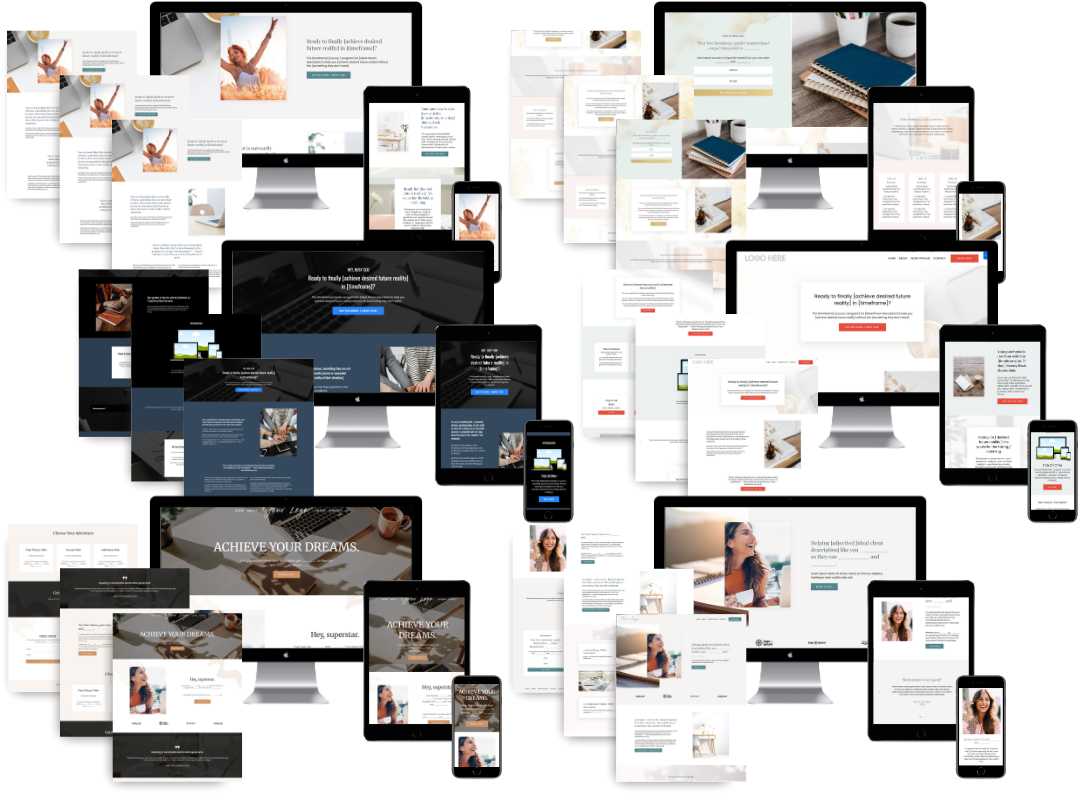
At Sierra Lin Design, I specialize in building custom Kajabi websites for coaches and online course creators who are done with cookie-cutter templates and tech headaches. Every site I build is designed around your specific client flow, from the first visit to the booked session and beyond. If you want a site that attracts the right clients, handles your admin automatically, and reflects your brand with clarity, I would love to help. Start with the free Kajabi templates to get a feel for what is possible, or explore the custom Kajabi design services built specifically for coaching businesses like yours.
FAQ
What is the main role of a website in a coaching business?
A coaching website functions as a client engagement system that attracts visitors, builds trust, converts leads, and supports ongoing client delivery. It should handle booking, intake, payment, and resource sharing, not just introduce your services.
How do coaching websites help coaches get more clients?
Websites attract clients through search-optimized content and clear messaging, then convert them with strategic CTAs and friction-free booking paths. Conversion-focused design with a booking button on every page is one of the highest-impact changes a coach can make.
What features does a coaching website need to reduce admin work?
Integrating online scheduling, automated intake forms, payment processing, and session reminders directly on your website eliminates most manual admin tasks. Platforms like Kajabi consolidate these tools in one place, reducing the complexity of managing multiple separate apps.
How does site speed affect a coaching business website?
Slow-loading pages make it harder for visitors to explore your services and reach your booking page. Keep important content easy to access, optimize large images, and test the full journey on a phone so potential clients can move from reading about your offer to taking the next step.
Does a coaching website need a blog?
A blog is one of the most effective ways to demonstrate expertise and improve SEO rankings over time. Publishing articles on topics your ideal clients are already searching for builds authority and increases the likelihood that your site appears in both Google search results and AI-generated summaries.
Recommended
- Websites for Coaches: 10 Features Your Site Needs Now
- The 10 Best Practices for Effective Web Design for Coaches
- 13 Brilliant Examples of Life Coach Websites, Plus Tips!
 Sierra Janisse · Founder of Sierra Lin Design
Sierra Janisse is a verified Kajabi Expert who helps online business owners build profitable websites on Kajabi. From SEO and copywriting to website design, branding, automations and funnel strategy, she is the go-to expert for Kajabi users who want to attract more clients and customers with their websites.

🚨Get the FREE Checklist
Skip the Kajabi tears—Swipe the free Website Checklist & Funnel Map
Exactly what should go where on your Kajabi site to maximize leads.